
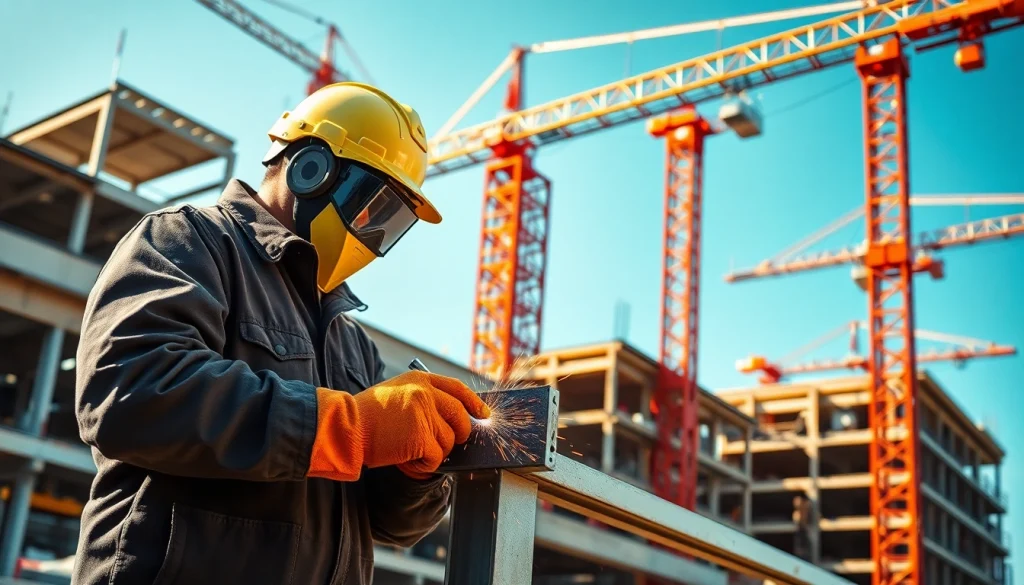
Understanding Structural Steel Welding Fundamentals
What is Structural Steel Welding?
Structural steel welding is a crucial process in the fabrication and erection of metal frameworks used in various engineering projects. This specialized technique involves joining steel pieces through the application of heat, pressure, or both, allowing for the creation of robust structures capable of bearing significant loads. It plays a vital role in the construction of buildings, bridges, and other infrastructural elements, ensuring durability and stability over time. By effectively utilizing structural steel welding, engineers can design structures that withstand environmental stresses, seismic activity, and other demanding conditions.
Key Techniques in Structural Steel Welding
Several techniques are employed in structural steel welding, each with its own applications and advantages:
- MIG (Metal Inert Gas) Welding: Ideal for thin materials, MIG welding uses a continuous wire feed and inert gas to shield the weld pool, resulting in precise and clean welds.
- TIG (Tungsten Inert Gas) Welding: Known for its versatility and the ability to weld various metals, TIG welding offers high-quality welds but is slower than MIG welding.
- Stick (Shielded Metal Arc) Welding: This technique is well-suited for outdoor applications, utilizing a consumable electrode to create the weld. It is particularly effective on rusty or dirty surfaces.
- Plasma Arc Welding: Similar to TIG welding but using a high-temperature plasma arc, this method allows for enhanced precision and control.
Applications of Structural Steel Welding in Engineering
The applications of structural steel welding are extensive and can be found across various industries. From constructing high-rise buildings and bridges to manufacturing components in heavy machinery, this welding technique is integral to modern engineering. For example, in the oil and gas sector, structural steel welding is crucial for fabricating pipelines that must withstand high pressures and corrosive environments. Additionally, the automotive industry relies on it for producing strong vehicle frames that can endure crash forces while maintaining safety.
Essential Tools and Equipment for Structural Steel Welding
Overview of Welding Equipment
The right tools and equipment are essential for successful structural steel welding. An overview of key components includes:
- Welding Machines: Different types of equipment, such as MIG, TIG, and stick welders, should be selected based on the specific requirements of the project.
- Electrodes and Filler Material: The choice of filler material is critical in achieving strong welds. Select electrodes designed for the specific steel grade being welded.
- Welding Cables and Connectors: High-quality cables ensure efficient power delivery, while connectors facilitate seamless transitions during the welding process.
- Welding Accessories: Clamps, fixtures, and positioning tools aid in stabilizing work pieces and ensuring accurate alignments.
Safety Gear for Structural Steel Welding
Safety should always be the primary concern when engaging in structural steel welding. Key safety gear includes:
- Welding Helmet: Protects the face and eyes from harmful ultraviolet and infrared radiation emitted during welding.
- Gloves: Heat-resistant gloves protect the hands from burns and provide grip during handling of hot materials.
- Protective Clothing: Flame-resistant clothing prevents sparks and molten metal from igniting clothing.
- Respirators: Essential in confined spaces to filter out harmful fumes and particulate matter generated during the welding process.
Maintenance of Welding Tools
Proper maintenance of welding equipment ensures longevity and optimal performance. This includes regular cleaning of welding nozzles, checking connections and hoses for wear, and keeping welding machines calibrated. Regular inspections can prevent unexpected breakdowns and enhance safety during operations.
Common Challenges in Structural Steel Welding
Identifying Welding Defects
Welding defects can compromise the integrity of a structure. Common issues include:
- Porosity: The presence of gas pockets in the weld can weaken the joint.
- Undercutting: This occurs when the weld metal erodes the base metal edge, leading to a reduction in strength.
- Lack of Fusion: This results from inadequate heat, failing to bond the weld metal to the base material.
Solutions to Prevent Weld Cracking
Weld cracking is a significant concern in structural steel welding. To mitigate this risk, preheating the steel before welding is effective as it helps to relieve stresses. Additionally, controlling the cooling rate after welding by using heat treatments can further prevent cracks.
Managing Heat Input in Structural Steel Welding
Excessive heat input can lead to distortion and adversely affect the mechanical properties of steel. Managing the welding parameters—such as voltage, current, and travel speed—ensures optimal heat input, maintaining the balance necessary for robust welds.
Best Practices for Structural Steel Welding
Preparing Materials for Optimal Welding
Preparing materials correctly is critical for successful welding. This includes cleaning the surfaces to remove contaminants like oil, rust, and paint, ensuring strong adhesion of the weld. Proper fit-up of the work pieces prior to welding minimizes gaps and inconsistencies.
Choosing the Right Welding Filler Material
Selecting the appropriate filler material is paramount to achieving high-quality welds. Compatibility with the base material, strength requirements, and desired mechanical properties should guide the choice of filler material.
Post-Welding Treatment Techniques
Post-welding treatments are vital to improve the performance of welded joints. Techniques such as stress relief annealing can help reduce residual stresses in the weld. Other treatments, like shot peening, can enhance fatigue resistance while promoting durability.
Evaluating Quality and Performance in Structural Steel Welding
Inspection and Testing Methods
Quality assurance in structural steel welding involves various inspection and testing techniques to ensure the integrity of welds. Non-destructive testing (NDT) methods such as ultrasonic testing, radiographic testing, and magnetic particle inspection can reveal defects without damaging the welded structure.
Understanding Welding Codes and Standards
Adhering to established welding codes and standards is essential in ensuring safety and consistency in fabrication. Codes such as the American Welding Society (AWS) standards provide guidelines for the qualification of welding procedures and personnel. Compliance not only guarantees high-quality welds but also enhances the reputational integrity of projects.
Metrics for Successful Welding Projects
Measuring the success of welding projects involves analyzing various metrics, including the yield strength of welded joints, the ductility of the welds, and the rate of defects post-inspection. Regular evaluations help in refining processes and improving overall quality.