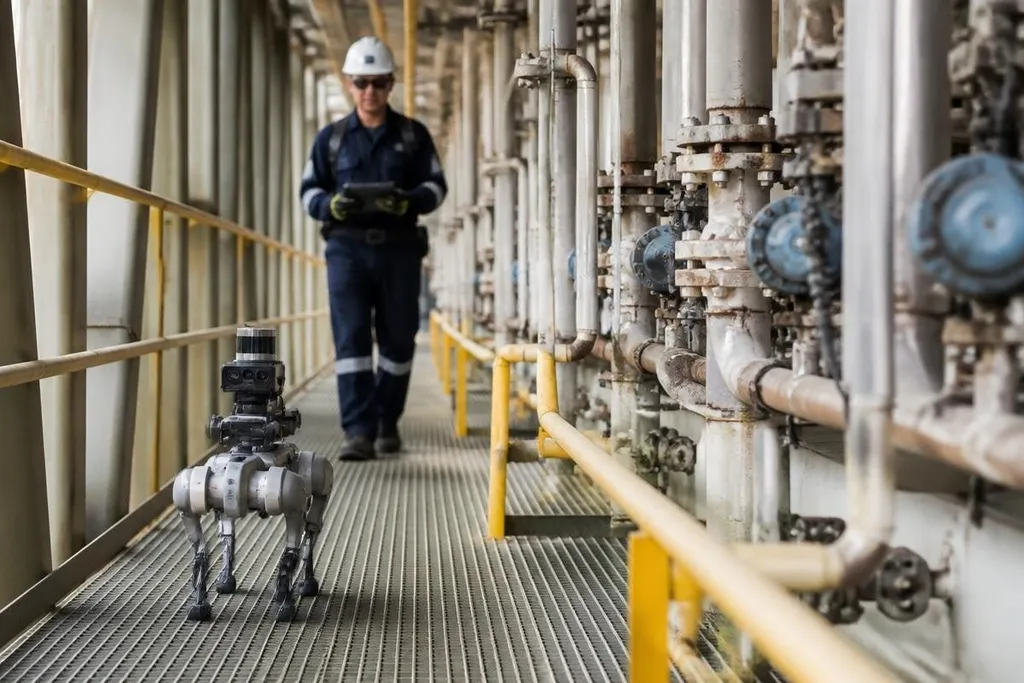
A maintenance robot can check the same pipe, floor, turbine, or storage rack on a set schedule without sending a person into the same hazard each time. The useful question for a plant manager is narrower: does the robot collect better information at a lower risk than the current inspection method?
- Robots can repeat routes and record changes over time.
- Sensors can find heat, leaks, wear, or blocked access points.
- People still need to confirm faults and plan repairs.
Where these robots help
The strongest use case is a task that repeats in a known place. A mobile robot can follow marked routes through a plant, while a crawler can inspect a tank, pipe, or narrow passage that is hard for a person to reach.
Cameras give the maintenance team a visual record. LiDAR measures shape and distance, so the robot can map a route and spot changes in equipment position. A thermal camera can show heat differences that an ordinary camera cannot see.
That record matters when a fault develops slowly. A single image may show a hot motor. Images from the same route over several weeks can show whether the hot area is growing, moving, or staying the same. The repair decision still belongs to a technician, but the robot can give them better material to check.
Repeat routes also reduce variation between inspections. The robot can stop at the same points, use the same sensor angle, and store each visit with a time and location. A technician then spends less time finding the asset and more time checking the fault.
What the robot actually does
Most maintenance robots handle a narrow set of jobs. They move, sense, record, and report. Some carry a camera mast; others use wheels, tracks, legs, or a small arm to reach equipment.
It may flag a loose panel, a damaged floor surface, a blocked valve, or a rise in temperature. Those alerts need a rule that connects the sensor reading to a real maintenance action. Without that rule, the system produces a long list of images that someone still has to sort.
A robot that uses autonomous navigation may work from LiDAR, cameras, floor markers, or a fixed map. If the plant changes its racks or leaves a pallet across the route, the robot may stop, take a wrong path, or ask for remote help.
That failure case belongs in the plan before the robot starts work. Set the stop rule, remote alert, and restart check before a changed route leaves the machine beside a rack or pallet. Reports on maintenance robotics and automation can help you compare the test setting with the job the robot must do.
Where the risks sit
Safety comes first when a robot shares space with workers. The site needs marked operating areas, speed limits, emergency stops, and a clear rule for remote control. The robot also needs a safe response when a person, vehicle, or loose object blocks its path.
Bad readings create a second risk. A camera can miss a fault behind a cover. A thermal camera can read a surface affected by airflow or sunlight. Vibration data can change when a machine runs at a different load. A technician must check the sensor result against the equipment and its operating state.
The system can also fail as a maintenance tool even when its motors and sensors work. If its records do not connect to the plant's maintenance software, someone may copy findings by hand. That adds delay and creates another place for an error.
Cybersecurity matters when the robot sends data over a network or accepts remote commands. Limit access, keep a record of commands, and separate the robot from systems that control production equipment. A camera on a moving robot can also record people, labels, or process details that the site did not plan to collect.
Before you buy
Use this checklist to test the job before choosing the machine:
- Repeat the route: Can the robot reach every inspection point under normal plant conditions?
- Name the fault: Which sensor reading leads to a repair request?
- Set the handoff: Who checks an alert, and how fast must they respond?
- Plan blocked paths: What happens when a worker, pallet, door, or spill stops the robot?
- Check the records: Can the findings enter the maintenance system without manual retyping?
- Price the full job: Include setup, charging, sensor checks, software, training, and repairs.
I'd skip a maintenance robot if the team cannot name the fault it will find or the action that follows an alert. A scheduled machine that produces unreviewed images is another task, not a repair system.
Start with one route and one fault type. Keep the robot only if its records change a maintenance decision, and measure that result before adding more routes.